
Enough is Enough
“Rats are attacking babies.” A devastating call from my friend Sawsan Batato from the Diocese of Jerusalem reveals a crisis still unfolding beyond the headlines.


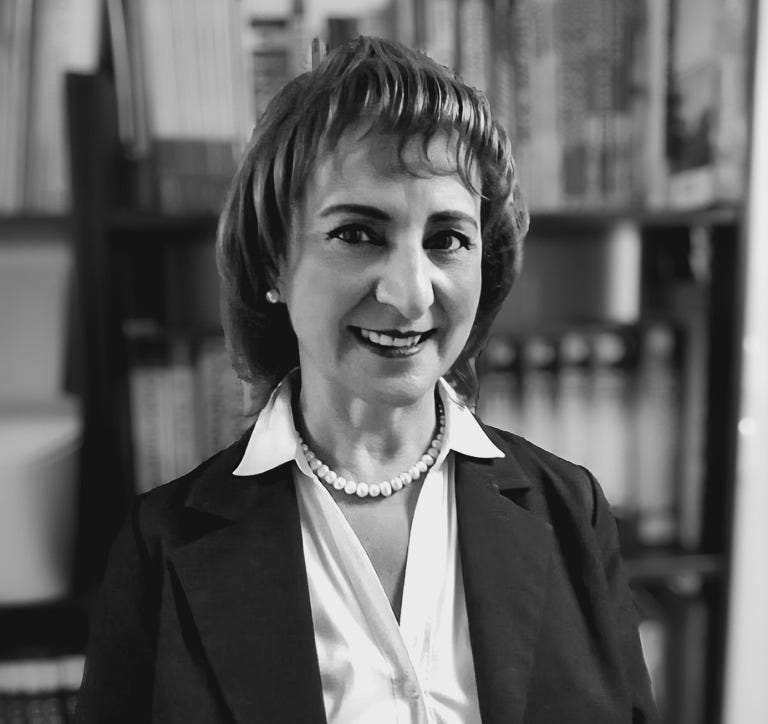
I’ve been on a number of calls with Sawsan over the last three years, and one of the things I have always respected about her is her ability to carry the situation without letting it overwhelm the conversation. She is usually composed, measured, and able to explain what is happening in a way that helps the rest of us engage, even when the reality is hard to hear.
This call was different.
I have heard her speak about the airstrikes, the casualties, and the immense strain on the Al Ahli hospital due to the war on Gaza many times before, but on this particular call, what she was describing was what happens when the systems that sustain life are no longer functioning.
“Rats are attacking babies,” she said, falling silent. She composed herself again. When she started talking again, my friend’s voice was quieter, more fragile than I have ever heard it.
“This is beyond anything we can tolerate.”
She wasn’t being dramatic, and wasn’t saying this for effect. This is a strong woman, who has endured more than a lifetime’s worth of hardship. It was simply the weight of what she was describing catching up to her.
Waste is no longer able to be collected. Being out on the streets would be too dangerous. People are burning rubbish where they live because there is nowhere else for it to go. Plastic, medical waste, whatever is there. The air is toxic. Water is unsafe and the ability to manage personal hygiene is challenged. In these conditions, disease spreads easily.
Now there are rats.
She spoke about newborns, only a few months old, being bitten, and did so with a quiet disbelief that she even had to say those words. The very thought of waking up to crying and seeing a rat on you your child is unimaginable to me. My heart cries with hers. I know the terrible impact this war is having on her and all of her colleagues.
With the Gaza ceasefire in place and wars raging elsewhere the media attention has pivoted its focus. Attention has moved elsewhere, and with it the sense of urgency. What remains is less visible than before, but in many ways more dangerous. The cameras are gone, but the conditions that sustain life have continued to erode. The absence of basic services is now doing what the violence began, only more slowly and with less attention. “We used to count the number of people killed by airstrikes. Now people are dying in their thousands because they cannot access basic needs, including medical care.”
Sawsan didn’t raise her voice when she said it, but it landed with a clarity that was hard to ignore. The situation has clearly shifted. It is no longer only about direct violence. It’s far more insidious than that. It is about what happens when access to food, water, sanitation, medicine, and basic health care is removed over time.
“The malnutrition is severely impacting them,” she said, referring to the children. “It is affecting brain development.”
“This will create an unhealthy generation, less educated, less productive, which will ultimately result in a fragile economy and leave Palestinians reliant on humanitarian aid for years to come.”
Her frustration and grief at the prospect is palpable. Sawsan is someone who has spent years working to strengthen systems and support communities to stand on their own.
What continues to stagger me though is that even now, amongst all the horror, the hospital continues to operate.
Al Ahli Anglican Hospital is receiving between 500 and 600 patients every day. Surgical cases, chronic disease, malnutrition, infection, oncology, rehabilitation, trauma. The hospital continues to receive all and is well beyond its capacity here but there are fewer and fewer alternatives.
Later in the call Sawsan surprised us all, “We are blessed.” It took a moment to understand what she meant. Not that the situation is acceptable, but that they are still able to save the lives of thousands by filling the gap left by other hospitals that have had to close or reduce services, either because they have been fully or partially damaged.
“They don’t have fuel. They don’t have spare parts. They cannot repair equipment.”
Al Ahli Anglican Hospital is receiving between 500 and 600 patients every day. Surgical cases, chronic disease, malnutrition, infection, oncology, rehabilitation, trauma. The hospital continues to receive all and is well beyond its capacity here but there are fewer and fewer alternatives.
So, the patients come, and they keep coming. And somehow, the Al Ahli continues to respond. Listening to her, you are left with the sense that it is holding, but only just.
As she explained this there was an urgency to her voice. If she could have physically shaken me she would have done.
“The world has to wake up,” she said. “Enough is enough.”
It was not said in anger. It was said by someone who has been living with this for three years and is running out of ways to make the urgency understood.
“We need immediate, worldwide advocacy.” Not at some point in the future. Now.
“The world has to wake up,” she said. “Enough is enough.”
She also spoke about Jerusalem, and here she was more specific about what this is doing to Christian communities.
“We are struggling to live,” she said. “We are struggling to practise our routine life.” Movement is restricted. Violence is increasing. Even going to the Old City is no longer safe in the way it once was.
She spoke about recent attacks and intimidation, including incidents involving Israeli settlers targeting Palestinian communities, and even clergy and religious in Jerusalem. What struck me was not just the incidents themselves, but the way she described the impact. There is a growing sense that Christians are no longer safe even in places that have always been central to their faith and identity.
“We are struggling to visit the holy sites.”
This is more than inconvenience. It’s a reminder that Christians are being cut off from their own spiritual and historical centre. Of being prevented from worshipping and the fellowship that we all need as people of faith.
At the end of the call she said something that has stayed with me and why I write now.
“You are blessed to be able to do something.”
It was intended as encouragement, and it is. But it clearly also carries a level of responsibility. Because she is still there. Still carrying this. Still showing up. Still trying to help the rest of us understand what is happening.
“This situation should not stay for one more day like this,” she said.
There was nothing exaggerated in that statement. It was simply the truth as she sees it. The question for us is whether we are prepared to see it as well, and what we are prepared to do once we do.
 | A guest post by
|
It's a disgraceful and utterly shameful situation. Jesus weeps. Thanks Mark for helping to keep the issue in the spotlight.